Al Jarreau

Al Jarreau promotional photo
We Got By cover

We Got By 1975 ★★★

Spirit • We Got By • Susan's Song • You Don't See Me • Lock All the Gates • Raggedy Ann • Letter Perfect • Sweet Potato Pie • Aladdin's Lamp

Al Jarreau is one cool cat, and this is one cool album—beatnik soul polished up for the mid-1970s without losing the flavor of cigarette smoke. Quite a bit rawer than the sleek yacht-pop sound he’d later become associated with, but he’s also hardly charging through the wall. Scooped out of the same cloud as Steely Dan, though not nearly as cryptic or musically aloof. Jarreau wants groove more than mystery. And the grooves are good. Punchy and varied. Tidy production, too, with sharp horns, neat springy rhythms, and electric piano giving the whole thing a little after-hours polish. You also get those small female backing-vocal accents popping in behind him. You mostly show up for the voice, though. His vocal acrobatics stretch notes just right, skip around the beat, and turn a melody into something bendy and half-improvised. “Raggedy Ann” has a nice funky bounce. “Sweet Potato Pie” is toe-tapping, polished and warm. “You Don’t See Me” begins almost like a proto-Bobby McFerrin a cappella bit before the bass guitar sneaks in under it. Not as cute as McFerrin, but many of us might consider that a boon. All around, good mature pop-soul. Even if that style generally annoys you, maybe you’ll like it. Take that as an endorsement. Jarreau’s range stays impressive throughout. Easy high notes, little conversational swerves, phrasing that morphs around the groove. Always something interesting to catch your ear. “Aladdin’s Lamp” closes things out. A lovely gospel-tinged piano ballad that gets into an ethereal realm without turning goopy. A remarkably tasteful album. Solid all the way. No especially large highs, but a pleasure to sit with.

Glow cover

Glow 1976 ★★½

Rainbow in Your Eyes • Your Song • Agua de Beber • Have You Seen the Child? • Hold On Me • Fire and Rain • Somebody's Watching You • Milwaukee • Glow

The question is whether we really need Al Jarreau adding all those ba-bib-boops in the middle of “Your Song.” Well, sure. At that point you might as well let him. The man is going to vocal-acrobat all over that sucker whether Elton John likes it or not. Glow is a less distinctive album than We Got By, which had more idiosyncratic bite to it, but it’s still slick, warm, and professionally pleasant. Sweeter too. Stickier. Like somebody poured jazz-soul over a stack of pancakes. “Rainbow in Your Eyes” is an enjoyable opener. Easy to tap your foot to, and he’s already talking about sailing the seven seas. So that didn’t take long. Give the man his beige cardigan and captain’s hat. The yacht is idling at the dock, the ice bucket sweating. The closer, “Glow,” ventures further into smooth-pop waters with those glossy strings and watery keyboards. A few songs, like “Milwaukee” and “Somebody’s Watching You,” slide into more standard jazzy territory, and that’s where my brain starts going on walkabout. Nothing embarrassing. Nothing painful. Just the sort of tasteful competence that slowly turns into background air. Jarreau remains a terrific singer, of course. He can do things with a phrase that most singers shouldn’t even attempt without parental supervision. Smooth and nice. Inspired? Not really thinking so.

Look to the Rainbow cover

Look to the Rainbow 1977 ★★★★

Live Album

Letter Perfect • Rainbow in Your Eyes • One Good Turn • Could You Believe • Burst in with the Dawn • Better Than Anything • So Long Girl • Look to the Rainbow • You Don't See Me • Take Five • Loving You • We Got By

Al Jarreau came up in jazz clubs, and this sounds like it. You can practically smell the smoke in the jacket. The record has bounce all over it. Too much, maybe, but that’s the fun. He walks onstage and immediately starts making noises like half the rhythm section got trapped in his throat. Boop-boos, pops, little rubber-band sounds flying around the room. Studio Jarreau is impressive. Live Jarreau sounds like somebody handed a microphone to a jazz imp that somehow got loose in the world. This may be the best way to hear him, unless you came aboard later for the yacht-soul cruise. “Take Five” is the one to play first. Paul Desmond’s old Brubeck Quartet number gets put in front of Jarreau, and he immediately starts climbing around inside it. He’s barely singing at first. It’s more like he’s emptying a junk drawer of rhythm noises into the microphone, and after a while you stop passively listening and start staring at the speakers, trying to figure out how the man is doing it. The title track is long, soft, and apparently beloved by every magazine writer who ever held a jazz poll. I like “Could You Believe” better in that lane—a warm soul number with soft electric piano and actual room to breathe. “Burst in with the Dawn” picks up a lite-funk groove, and Jarreau’s scat singing starts reaching machine-gun speed. It’s a lot of fun. Jarreau won a Grammy for jazz vocals for this album, and I don’t even have to look at the competition to conclude that he probably deserved it. This is the closest thing we get to quintessential Jarreau—before the yacht reached the dock.

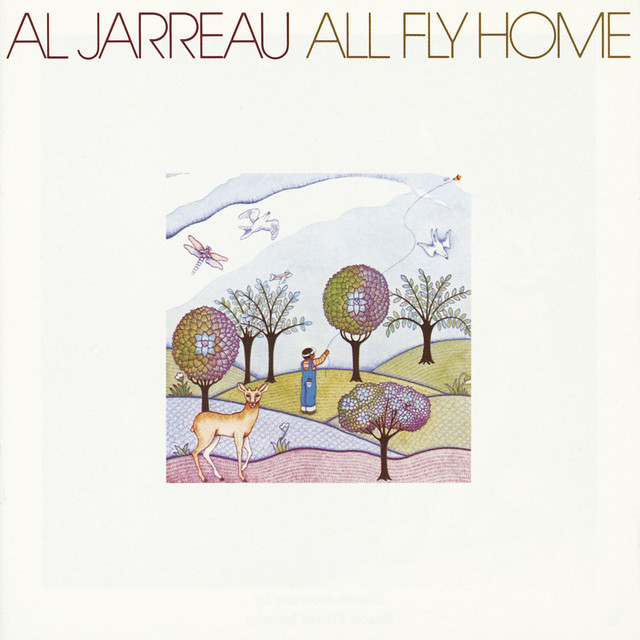
All Fly Home cover

All Fly Home 1978 ★★

Thinkin' About It Too • I'm Home • Brite 'N' Sunny Babe • Cryin' Together • Imagine • Love Is Real • Alonzo • (All I Have Is) Love • Fly • All Fly Home

The yacht hasn’t left the harbor yet, but somebody has checked the weather, packed the linen pants, and given the electric piano a fresh polish. All Fly Home wants to stretch beyond the usual late-’70s electric-piano lounge. You get funk touches, jazz touches, some soul-pop, some grownup gloss, but it stays pretty restrained. Jarreau co-wrote most of it, but the songs still feel a little remote coming through the speakers. Jarreau remains an extraordinary singer. “Thinkin’ About It Too” opens with some light funk, sweet and neatly behaved. “I’m Home” slows things down with electric piano and a soul performance Jarreau nearly carries by voice alone. “All” is a fairly blank soul-pop song, but Jarreau stretches out a long held note in the middle for a little show-offey moment. “Fly” gives him more room to operate—the scat singing returns and the vocal acrobatics come with it. The other standout is a jazzy seven-minute cover of The Beatles’ “She’s Leaving Home”—light and soft, with long notes while the piano tinkles around and the drummer busies himself with complicated little rhythms. A well-made album and certainly no one is being lazy. Still, after it’s over, what I remember most is the smoothness. Vanilla pudding, basically. Easy going down—not much reason to keep thinking about it after the bowl is empty.

This Time cover

This Time 1980 ★★½

Never Givin' Up • Gimmie What You Got • Love Is Real • Alonzo • (If I Could Only) Change Your Mind • Spain (I Can Recall) • Distracted • Your Sweet Love • (A Rhyme) This Time

Al Jarreau had been headed toward smoother waters for several albums by now, but this is where producer Jay Graydon entered the picture and made it official. That’s right, folks—the deck is polished, copious amounts of suntan oil applied, and the captain’s hat is on and just a little crooked for style. We are now finally in yacht-rock territory. Graydon takes this jazz vocalist in the rough—who at one point threatened to be cool—and buffs him into something softer, glossier, and more processed. The album shines like a glassy Caribbean ocean. Gentle pianos. Twinkling electric keys. The R&B rhythms run smooth as machinery, and Jarreau’s voice floats over the top like a soft trumpet. Little jazzy noodles appear now and then, nimble and tasteful. Nothing to distract you from the central groove. And of course everything careful not to splash the main attraction. While this kind of music isn’t necessarily about hooks, hooks still help—and this album just doesn’t produce many potent ones. The album’s centerpiece is “Spain (I Can Recall),” which finds a few small grooves, keeps itself moving, and then sends Jarreau off on an extended scat detour. Other songs like “Light Up” and “Your Sweet Love” have that smooth-as-silk instrumentation that gives me flashbacks from waiting for tech support, but the melodies just don’t give the songs that needed push to make them immortal. The album as a whole is certainly more focused than All Fly Home, and it’s not terrible by any means. I just wish these waters were a little more colorful.

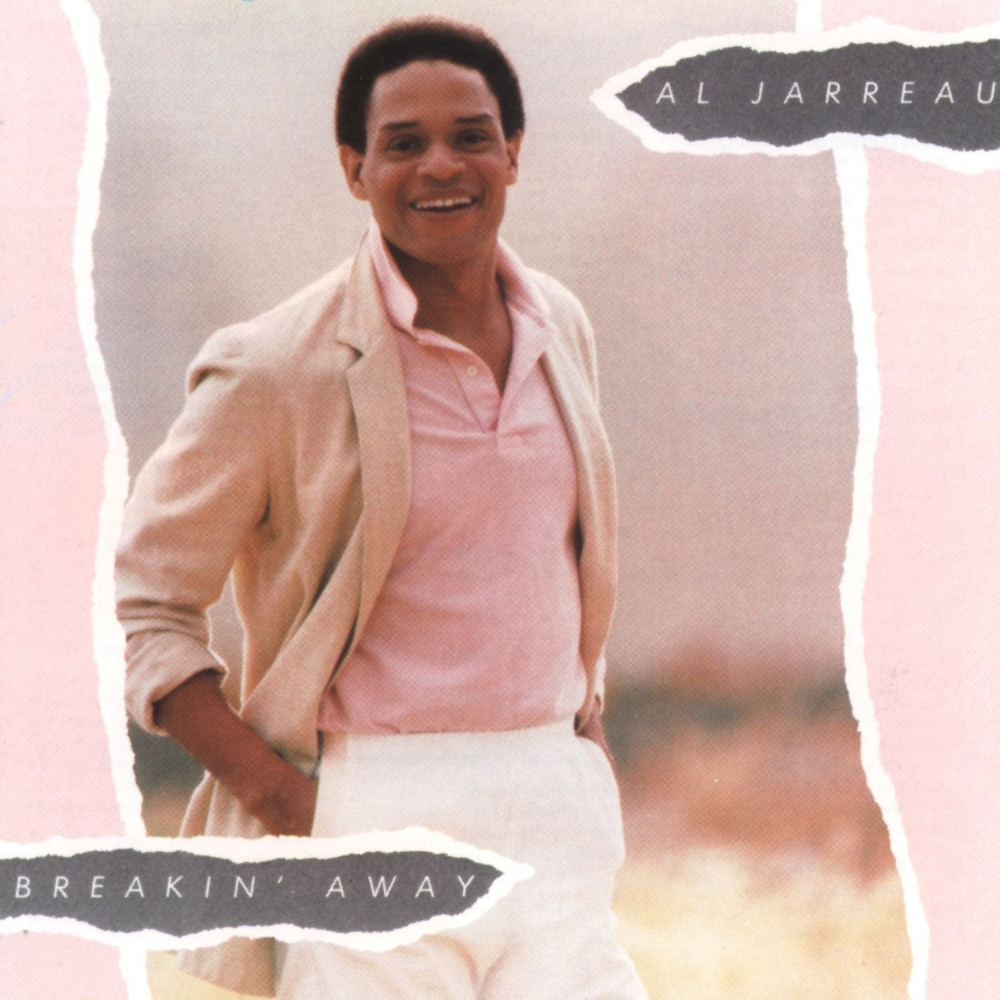
Breakin' Away cover

Breakin' Away 1981 ★★★★

Closer to Your Love • My Old Friend • We're in This Love Together • Easy • Our Love • Breakin' Away • Roof Garden • (Round, Round, Round) Blue Rondo à la Turk • Teach Me Tonight

Oh thank God. After my lukewarm reaction to Al Jarreau’s first real foray into yacht-rock waters, I was starting to worry. I’d spent all this time talking up his smooth-pop years while reviewing the early albums, and it was starting to occur to me: what if I didn’t actually like them? Wouldn’t that be awkward? I hadn’t heard any of these before reviewing them, by the way. Well, crisis avoided. I love this thing. Disclaimer, though. You do need a taste for this sort of immaculate soft rock before even coming near it. If glistening production, plush grooves, bright horns, smooth synthesizers, and elegantly precise session players make you reach for the button on your ejection seat, then push away. For everyone else: welcome aboard. Jarreau glides across all this polish—warm lower-register murmurs, caramel falsetto, phrases stretched like taffy. The scat singing is the surprise, not because he does it, but because it’s never sounded more at home on one of his records. Those rubbery little noises, surrounded by a band this clean, become weirdly beautiful. “Blue Rondo à la Turk” isn’t characteristic of the album, but it’s the showstopper: another pass at Dave Brubeck, with Jarreau doing vocal acrobatics that sound physically impossible while the band races after him and kicks up actual dust. The hits are here too: “We’re in This Love Together,” “Roof Garden,” “Closer to Your Love.” Glowing ballads, uptempo numbers, deeper cuts—they all sit together naturally. Yacht rock, absolutely—but this is the Al Jarreau soft-rock album I was hoping existed.

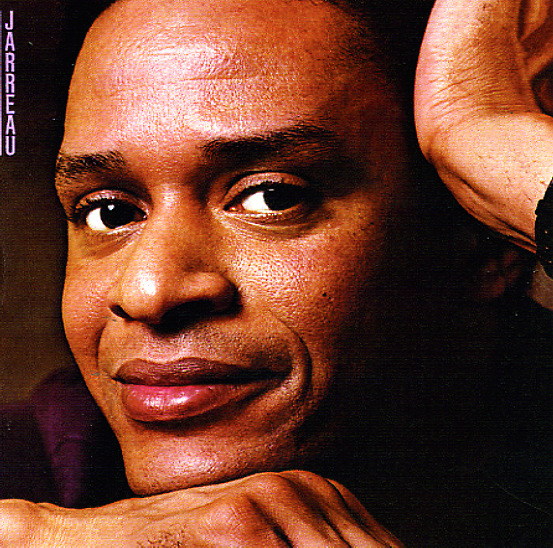
Jarreau cover

Jarreau 1983 ★★★

Mornin' • Boogie Down • I Will Be Here for You (Nitakungadea Milele) • Save Me • Step by Step • Black and Blues • Trouble in Paradise • Not Like This • Love Is Waiting • Imagine

The jazz-soul, cardigan-wearing seafaring Al Jarreau from We Got By has now been escorted into the executive wing. The album can still fairly be classified as “yacht rock,” but we’ve taken it further down the adult-pop trajectory of the 1980s, where corporate polish is preferred over the watery jazz lushness of We Got By. The tight horn section is still here, though, and that turns out to be plenty to carry these songs by its sass alone. Jarreau’s voice is still the main event, of course, slipping right into the orchestration as if he’s just another instrument—except one that knows how to sip champagne and skibbidibop between toasts. Still a good album on the whole. There’s one giant in particular: “Mornin’.” Wonderful thing. Sunlight music. The groove moves with an easy flow. There’s a warm bass line underneath, bright keyboards above, and chord changes that keep taking little upward turns when you think they’ve settled. The moment that gets me is Jarreau singing “reach out my hand and touch the hand of God.” I feel the hairs on the back of my neck go up. Talk about a transcendental moment of AM pop. “Love Is Waiting” is another keeper with its sleek rhythm and bright melody, with a brass section that lends the song little flashes of gold dust. “Black and Blues” swings nicely as well, opening with a catchy horn refrain and then generating a rhythm snappy enough to remind you this man still came from jazz. “I Keep Callin’” slips into the smooth-pop lane, but there’s Jarreau’s signature scat and rhythmic play in there to keep it lively. “Boogie Down” is some light electro-funk—it’s not terrible but not what we need from Jarreau, exactly. It’s an imperfect record, but it makes a good listen anyway. Try as it might, the 1980s corporate machine hadn’t quite figured out how to swallow him whole yet.

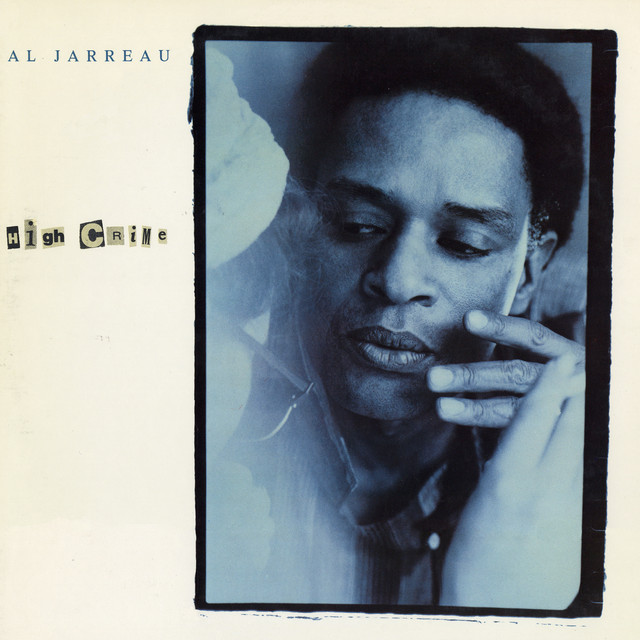
High Crime cover

High Crime 1984 ★★

Raging Waters • Imagine • Murphy's Law • Tell Me • After All • Never Givin' Up • Gimme What You Got • Love Speaks Louder Than Words • All or Nothing at All • Let's Pretend

This is where Al Jarreau appears to have been abducted by synth goblins. They even tried to write a ransom note on the album sleeve. Except they only wrote “High Crime” instead of clarifying what they did or what they wanted. Now, I am not anti-synth. Far from it. I spend an unreasonable portion of my life listening to synthesizers make beeping noises from various decades. If anybody should be receptive to an ’80s makeover, it ought to be me. But the problem isn’t the electronics. The problem is what they replace. On the previous records, the band opened up around Jarreau and let him become part of the evolving arrangement. Here he’s more like a hood ornament on a running car. The keyboards and drum machines pick a pattern and stay there, leaving Jarreau to flutter over cold surfaces that don’t give much back. At least the horns are still here on “Imagination,” providing little one-two punches every once in a while, but it’s not enough. I couldn’t call the production cheap, either. Somebody clearly spent money polishing the chrome. But that’s where the real crime lies—the melodies simply aren’t hooky enough. “After All” is a generic, slicked-up soul ballad that gives Jarreau a little room to show off that remarkable voice, but the melody just isn’t memorable. “Let’s Pretend” is pinned to a keyboard riff that has nowhere interesting to go and takes its time getting there. “Tell Me” almost stumbles into something interesting, with a rhythm reminding me a little of “She Blinded Me with Science,” except transplanted into an adult-contemporary ecosystem. “Love Speaks Louder Than Words” might be the best thing here, mostly because it has the kind of smooth rhythm that gives me the feeling of sailing across glassy waters. “Murphy’s Law” has a little jazz swagger and eventually wanders into a mildly interesting hook by the chorus. But these highlights are too few. The singing is still impeccable. The problem is everything around him feels too tidy, too squared-off, like a gifted improviser being handed a coloring book and warned not to make a mess.

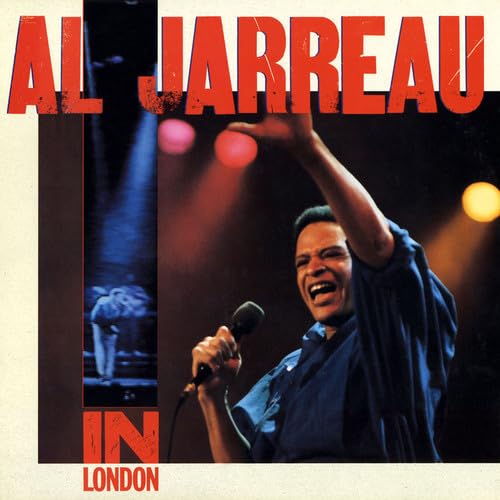
Live in London cover

Live in London 1985 ★★★

Live Album

Raging Waters • Black and Blues • I Will Be Here for You (Nitakungodea Milele) • Let's Pretend • High Crime • Roof Garden • Teach Me Tonight • We're in This Love Together

Al Jarreau hits the London live circuit in his peak yacht-rock years. Voice polished. Band spotless. Captain’s hat—well, maybe not physically worn, but spiritually implied. Unfortunately, this comes right after High Crime, the synth-centric studio album I didn’t like much, so the set list has to drag a few of those songs aboard. Starting with “Raging Waters,” which opens with the same cold, rapid-fire synth pattern from the studio cut. Sounds like it was installed by a hotel electrician. Still, Jarreau sings over it like he’s never met a weak arrangement he couldn’t outmaneuver. The live setting really does seem to be where he’s at home. If he can make “Raging Waters” work, he can probably do it with anything. It helps that the sound quality is terrific. The vocals are crystal clear. The rhythm section is locked in and pronounced, sometimes even better than on the studio cuts. The brass section kicks up dust like stampeding bulls. At one point, the saxophone starts doing flips, as if trying to out-impress Jarreau’s own throat. It can’t. Jarreau’s voice is ridiculous—elastic and silky, practically a woodwind by itself. “Roof Garden” is the obvious keeper. Punchy enough to survive the soft-rock atmosphere, loose enough to let Jarreau bounce around inside it. “I’ll Be Here for You” slows things down, but the live arrangement gives it extra lift, especially with that more pronounced bass. Jarreau sings the hell out of it too, and the spirited scat singing at the end is, I assume, what most of these ticket buyers were excited to hear. “Teach Me Tonight” starts with twinkle-finger piano, then settles into a quiet jazz-club groove. Jarreau knows how to work these rooms. As a live document from Jarreau’s yacht-rock era, this is a good one. But no “Mornin’?” Come on. That’s the man’s greatest contribution to the captain’s-hat sciences. Was it locked away for VIP passengers only? How many cruises do I have to take before someone lets me onto the good deck?

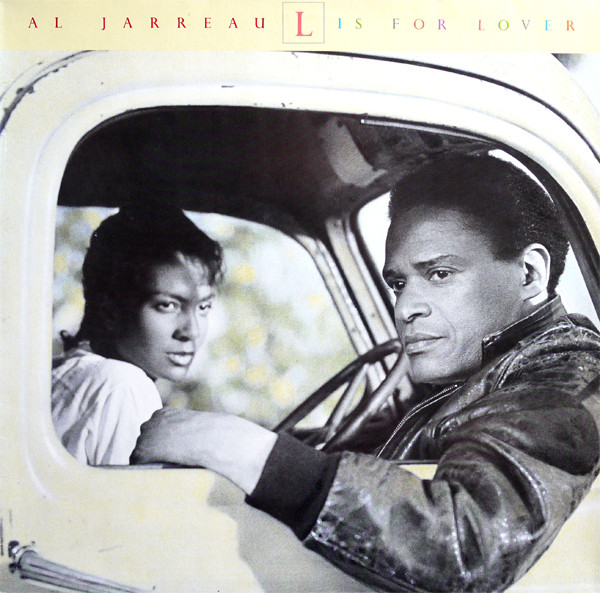
L Is for Lover cover

L Is for Lover 1986 ★★★★

Tell Me What I Gotta Do • L Is for Lover • Says • Pleasure • Golden Girl • Across the Midnight Sky • (We Got) Telepathy • Give a Little More Lovin' • No Ordinary Romance • Real Tight

Now we’re talking. Jay Graydon gone. Nile Rodgers in the room. Suddenly Al Jarreau isn’t a jazz-soul singer held hostage by a department-store keyboard display. He sounds like he’s in a studio with musicians who actually know what to do with him. The rhythms are pristine. The melodies—maybe not infectious, but always giving the ear something to grab onto. Jarreau sounds looser. The synthesizers are still here, naturally, but they’re no longer running the meeting. We’re probably outside of Jarreau’s yacht-rock phase at this point, although you would probably still enjoy this music on a ship of some kind. Preferably one with yuppies everywhere sipping expensive champagne. There should also be a high-end watch store somewhere on board. Yuppies need their watches and smooth, sleek soul. The title track is the one I like most, which is good news for the song, since it’s repetitive and runs for more than five minutes. But what a groove. Easy, crunchy, likable. Xylophones knocking around in the sunshine. Warm female back-up singers. The kind of song that makes me want to recline on a back porch and pretend I have a lawn worth looking at. “Says” is the strange one: part French pop, part smooth ’80s pop, built on an asymmetrical rhythm and a melody that keeps stepping where I don’t expect it to. Elsewhere, the album keeps things smooth. Very smooth. Maybe too smooth. I’m not sure every song will keep calling me back, but as a whole, the album is remarkably consistent. Jarreau feels like he’s given room to move comfortably throughout, which—after High Crime—feels like a victory by itself. A reminder that when Jarreau is placed with producers who understand his vibes, 1980s gloss can make this old jazz cat sound right at home.